The Three Sisters

Here’s why our garden thrives:
Tradition.
The crops of corn, beans, and squash are together known as the Three Sisters. These plants complement each other, both in the garden as well as nutritionally.
Corn provides tall stalks for the beans to climb so that they are not out-competed by sprawling squash vines. The large leaves of these squash plants shade the ground, retaining soil moisture and combating weeds. Beans, meanwhile, stabilize tall corn stalks during heavy winds, while also fixing nitrogen—a key nutrient for corn—in the soil. Rhizobia absorb free nitrogen from the air and convert it into forms useful to plants.
The Sisters also form the center of many culinary traditions. A diet of corn, beans, and squash is complete and balanced: traditional maize provides complex carbohydrates, while beans are rich in protein and amino acids, with squash offering unique nutrients that compliment those of corn and beans. Though less important today, these three crops can also be dried and stored for long periods of time, enabling a stable supply of food through all seasons.
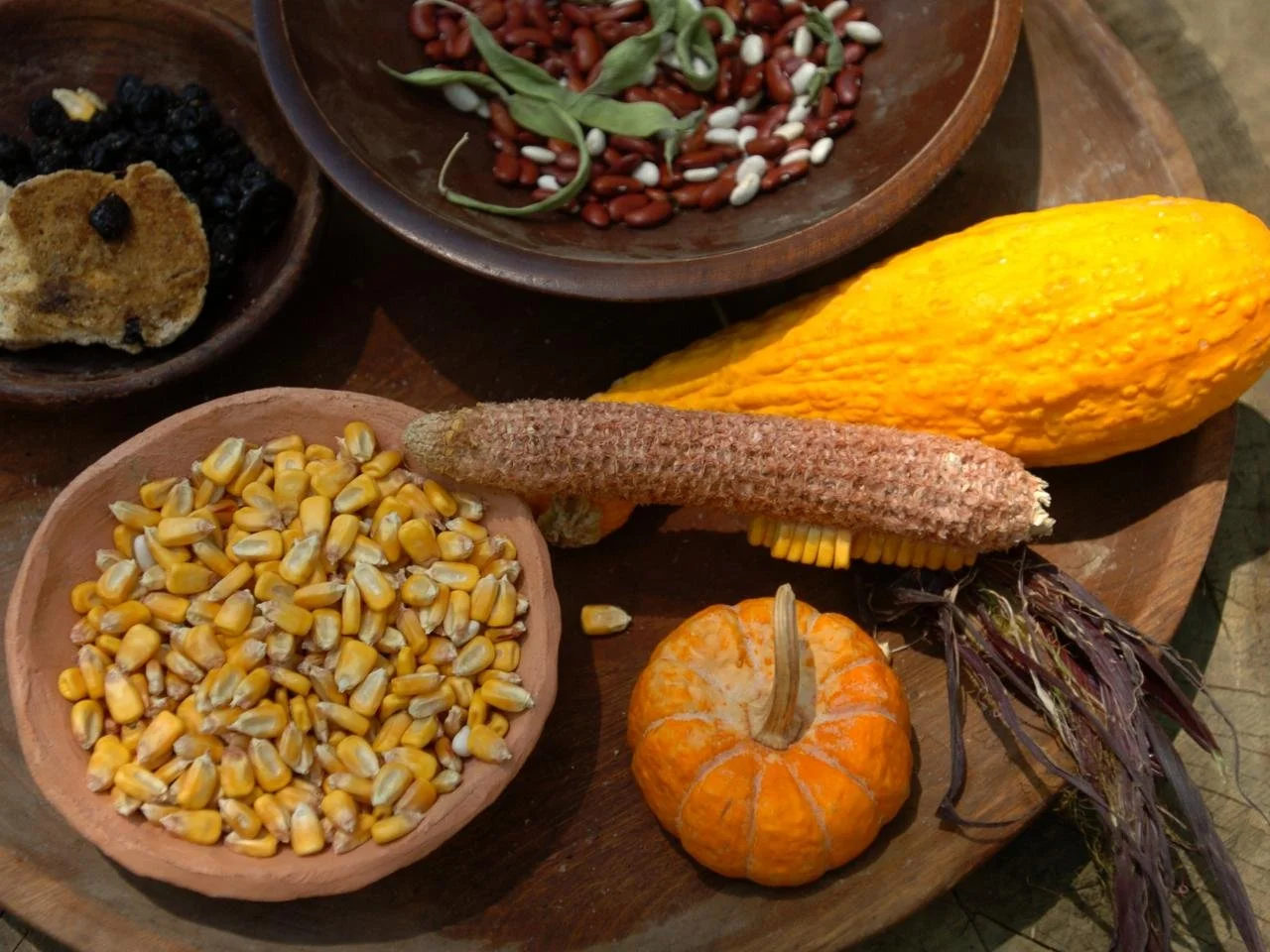
The tradition of calling these crops the "Three Sisters" originated with the Haudenosaunee (ho·deh·no·shaw·nee). Also known as the Iroquois, the Haudenosaunee live in the Great Lakes regions of the United States and Canada. In the Haudenosaunee method, all three types of seeds are planted together, in a series of mounds. These elevated mounds assist with drainage and prevent root rot, which is important in a region that receives abundant rainfall in the summer.
In the Southwest, there are also traditions of planting the Sisters together, as well as in separate fields. In dry-farmed areas like the Hopi and portions of the Navajo Nations, the Sisters are planted in separate areas of fields, with wide plant spacing, in order to maximize limited water. In areas with adequate water, the Sisters can be planted together in close proximity, to reap the companion planting benefits in the same cycle.
Regardless of how they are planted, these Sisters are a key staple for many Native American peoples—in addition to other crops like tobacco, sunflowers, amaranth, and melons.
